


From back-office automation to a 31% growth gap between AI adopters and laggards, here’s why 2026...
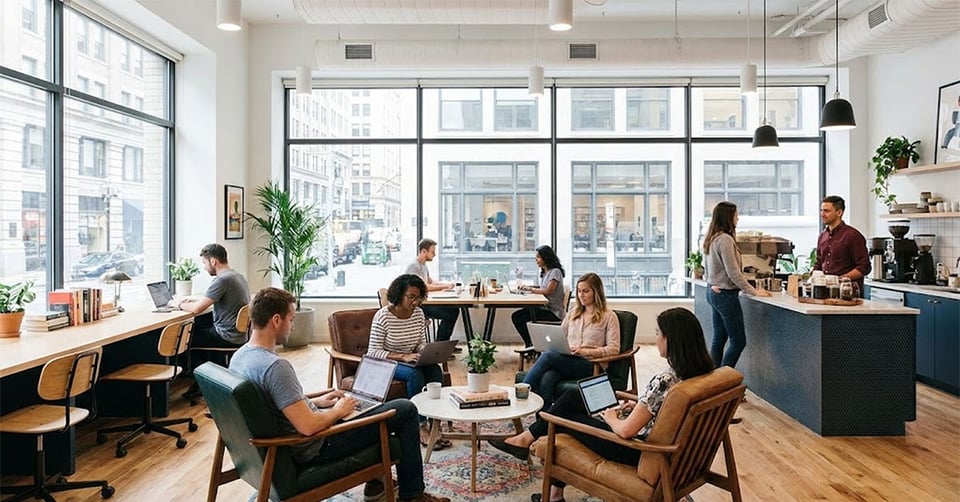
How hospitality-focused amenities are revitalizing Class B office.
While the broader commercial real estate sector continues its slow recovery from the pandemic, one segment is outpacing the rest: flexible office space.
According to a recent report from CNBC, Industrious, the flex office firm acquired by CBRE, increased its global footprint by 58% in 2025 and is projecting 100% growth in new signings for 2026.
For asset managers and property owners, this surge signals more than just the success of a single company; it highlights a fundamental shift in how tenants consume space and how landlords must adapt to capture value.
Here are the key takeaways from Industrious' growth and what they mean for the future of CRE.
1. The “hub and spoke” model is real
The old model of commuting an hour to a central business district (CBD) is fading. Industrious CEO Jamie Hodari notes that of their last 50 openings, a disproportionate number were in neighborhoods, not downtown cores.
Tenants are demanding workspaces near where their employees live. They want the ability to bike or walk to work, or drive just five minutes. For CRE investors, this suggests that opportunities are migrating from traditional CBDs to high-quality suburban and neighborhood assets.
2. The “hotelification” of Class B office
High vacancy rates in Class B office buildings remain a challenge. However, flexible office operators are proving to be a viable solution for revitalization.
Landlords are increasingly partnering with operators like Industrious to manage portions of their buildings. By introducing hospitality-focused amenities and a "boutique hotel" feel, landlords can de-risk the remainder of the building and attract tenants who might otherwise overlook an older property.
As Industrious President Anna Squires Levine puts it, these spaces bring energy to a building, preventing the lobby from feeling like a "no-man's land".
3. The shift to management agreements
Perhaps the most critical shift for asset managers is the business model itself. Unlike the master-lease model that got other coworking giants into trouble, Industrious largely operates on management agreements.
In this structure:
-
Risk and profit are shared: The operator doesn't pay fixed rent; instead, they split the profits with the landlord.
-
Asset-light resilience: This approach allows the operator to be more resilient during downturns, avoiding massive lease liabilities.
For landlords, this means moving from a passive rent-collection role to an active partnership, requiring more sophisticated financial tracking and transparency—exactly the kind of complexity where robust budgeting tools become essential.
The outlook
The global flexible office market is projected to nearly triple, growing from $54.59 billion in 2025 to $147.2 billion by 2033.
While the sector is volatile—outperforming in good times but risking deeper drops in downturns—the trajectory is clear. To stay competitive, landlords must look beyond the 10-year lease and embrace the flexibility tenants are demanding.
This article references third-party research and market commentary for informational purposes only. Kardin does not endorse or promote any specific investment strategies or external products mentioned. Kardin may use widely adopted third-party technologies on its website and internal operations, such as analytics and productivity tools, in the normal course of business.